Soil Washout Behind a Seawall: What Florida Property Owners Should Know
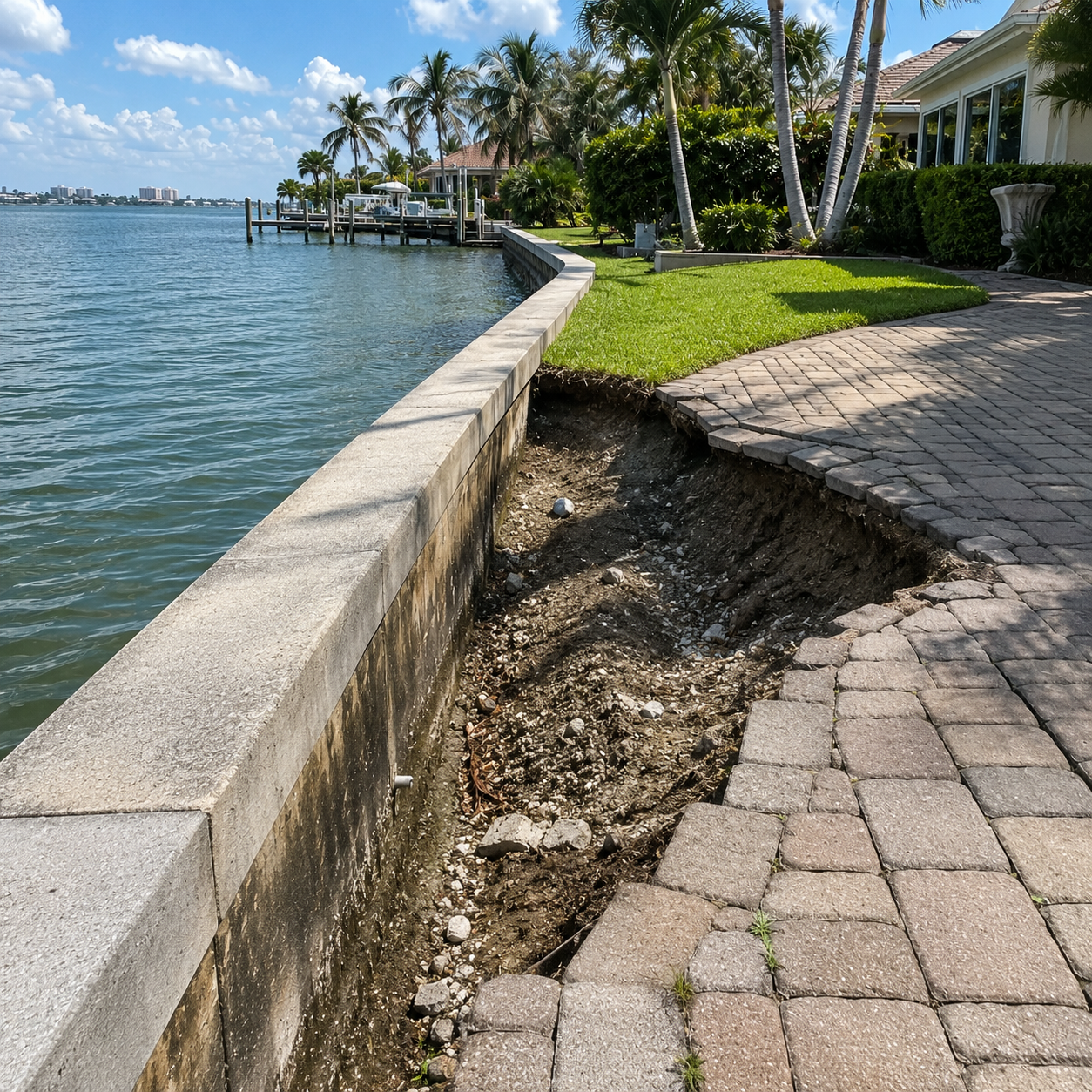
A seawall may look solid from the water while the soil behind it is slowly disappearing. For waterfront property owners in Florida and throughout the Gulf Coast, soil washout behind a seawall can create hidden voids that eventually lead to sinking ground, cracked concrete, unstable pavers, and other costly problems.
Understanding the warning signs early can make the difference between addressing localized erosion and facing more extensive property damage.
Why Does Soil Wash Out Behind a Seawall?
Seawalls are constantly exposed to changing water levels, tides, rainfall, drainage, and storm activity. When water finds openings in or around a seawall, it can move through the surrounding soil and carry fine soil particles with it.
Over time, this movement can leave empty spaces behind the wall.
Heavy Florida rainfall can compound the problem. Water draining from the property toward the seawall may increase pressure and soil movement, while tidal changes can repeatedly move water through vulnerable areas.
The result can be a gradual loss of supporting soil even when the seawall itself does not appear to be failing.
Warning Signs of Hidden Seawall Erosion
Property owners should pay attention to changes occurring on the land side of the seawall.
Common warning signs include:
- Small depressions or sinkholes near the seawall
- Soil pulling away from the wall
- Pavers beginning to settle or separate
- Cracks developing in patios or pool decks
- Concrete slabs becoming uneven
- Soft or hollow-feeling areas near the waterfront
- Recurring holes that return after being filled with soil
- Visible water intrusion through seawall joints or openings
Simply adding dirt to a depression may hide the symptom without correcting the underground void or the pathway allowing soil to escape.
How Polyurethane Injection Can Stabilize Seawall Soil
Gulf Coast Soil and Seawall Doctors uses geotechnical polyurethane injection to address erosion, loose soils, and underground voids in appropriate seawall applications.
Specialized polyurethane resin is injected into targeted areas behind or beneath the affected structure. Depending on the application, the material can permeate and bind loose soil, fill underground voids, and create a water-resistant barrier that helps reduce continued water migration through treated areas.
Because the material is injected directly into the problem area, polyurethane stabilization can often be performed with substantially less excavation and property disruption than traditional repair methods.
SoilDocs works with NCFI geotechnical polyurethane systems designed for applications including soil stabilization, void filling, water control, concrete support, and infrastructure rehabilitation.
Do You Need to Replace the Seawall?
Not every erosion problem means the entire seawall needs replacement.
If the primary issue is soil loss, underground voids, or water migration behind an otherwise serviceable seawall, stabilization may provide a much less invasive option. However, seawalls with significant structural deterioration, movement, or other serious damage require proper evaluation before determining the appropriate repair.
The important step is identifying what is happening below the surface.
Frequently Asked Questions
Can a small hole behind a seawall become a larger problem?
Yes. A visible depression can indicate that soil has already migrated from beneath the surface. If the underlying pathway remains open, additional soil loss may continue.
Can polyurethane fill voids behind a seawall?
In suitable conditions, geotechnical polyurethane can be injected into underground voids and unstable soil to fill spaces, stabilize surrounding material, and help control water migration.
Concerned About Soil Disappearing Behind Your Seawall?
If you are seeing sinking soil, recurring holes, settling concrete, or other signs of erosion around your waterfront property, Gulf Coast Soil and Seawall Doctors can evaluate the affected area and determine whether polyurethane soil stabilization or void filling is appropriate.
Contact SoilDocs today to request a free quote.
Comments are closed