Proudly Serving the Gulf Coast
At Gulf Coast Soil and Seawall Doctors, we specialize in comprehensive solutions for all your seawall and soil repair needs, using polyurethane injection or polyresin. From expertly fixing concrete voids to seamless seawall repairs, precise concrete lifting and leveling, and addressing pool deck issues, we are dedicated to delivering top-notch services tailored to your exact requirements. With a focus on quality craftsmanship and customer satisfaction, trust us to restore and enhance the integrity of your concrete structures with precision and care.
We offer Financing
Prefer to pay over time rather than all at once? Prequalify for financing today and contact us to learn more about our services!
Our Services throughout the Gulf Coast
Unlock the key to preserving your shoreline for generations. Explore our comprehensive soil and seawall repair services.
Contact us now to schedule your free inspection and consultation.
Comprehensive Inspection
Our specialists will assess your property for damage, wear, or structural concerns, then develop a well thought out customized plan based on our evaluation.
Advanced Repair
Our skilled technicians employ advanced techniques to repair concrete and seawall problems, including cracks, erosion, and separation, for long-lasting protection.
Environmentally-Friendly
We prioritize coastal preservation, using eco-friendly materials and methods in concrete repairs to safeguard shorelines and minimize the environmental impact.
Expert Project
Management
Our committed project managers ensure seamless seawall and soil repair with clear communication, timely progress, and minimal property disruption.
Ongoing
Maintenance
Optimize your seawall’s durability with Gulf Coast Soil and Seawall Docs’ expert maintenance. We provide tailored repairs, ensuring longevity and customer satisfaction.
Concrete Lifting and leveling for foundations
Gulf Coast Soil and Seawall Doctors’ stabilization and concrete lifting and leveling enhance infrastructure durability, mitigate erosion risks, ensuring long-term structural integrity.
about us
Fixing Foundations, Safeguarding Shores.
At Gulf Coast Soil and Seawall Doctors, we specialize in comprehensive solutions for all your concrete repair needs. From expertly fixing concrete voids to seamless seawall repairs, precise concrete lifting and leveling, and addressing pool deck issues, we are dedicated to delivering top-notch services tailored to your exact requirements. With a focus on quality craftsmanship and customer satisfaction, trust us to restore and enhance the integrity of your concrete structures with precision and care.
Concrete Lifting Repair
Our experienced team is equipped to handle a wide range of projects, from small residential repairs to large-scale commercial and municipal restorations.
We offer financing
Prefer to pay over time rather than all at once? Prequalify for financing today and contact us to learn more about our services!
Fight Moisture Intrusion with Seawall Repair
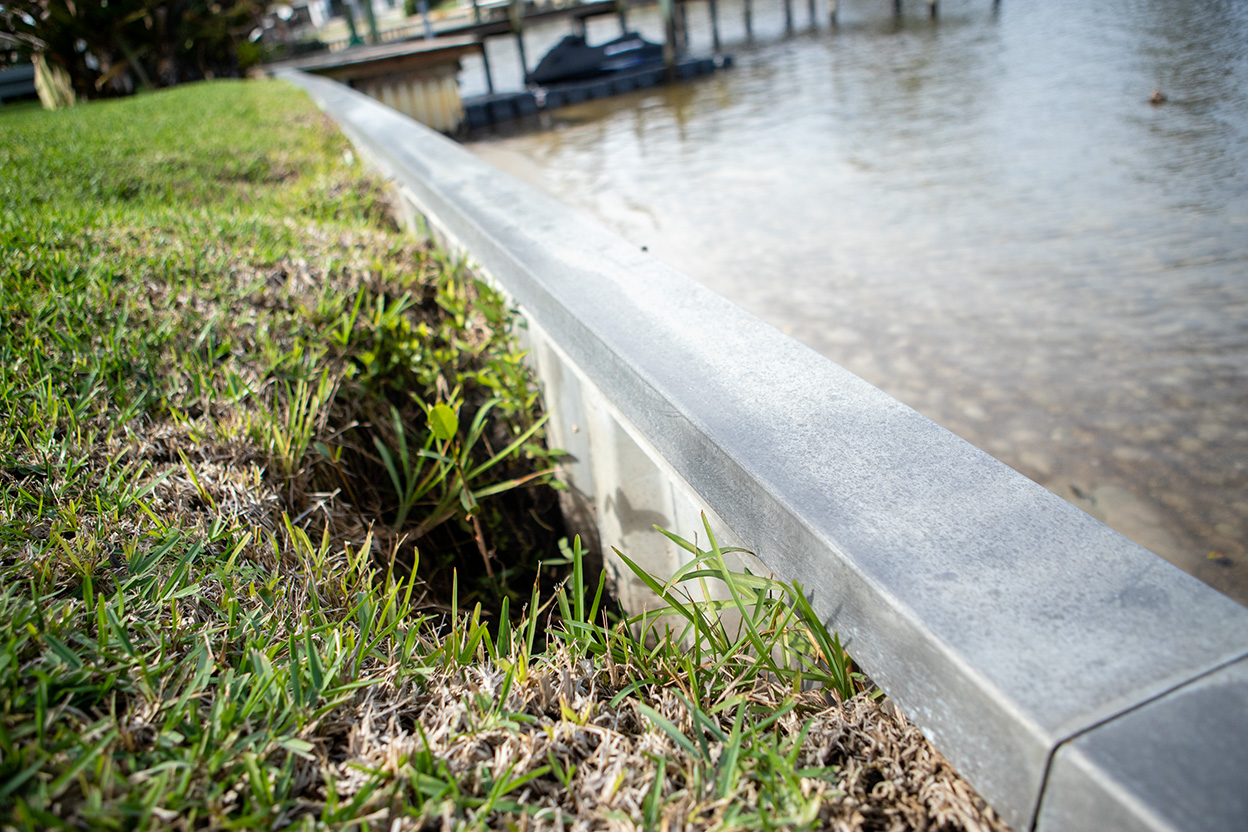
Moisture intrusion is a common problem for homeowners, but particularly for Gulf Coast homeowners with waterfront properties. If you have a home on the water, an effective and well-constructed seawall is essential in the protection of your property. With the occurrence of natural soil erosion, hurricanes and other severe storms, and rising sea levels, a seawall serves as the first line of defense against moisture and water damage. This makes seawall repair — sometimes called bulkhead repair — service vital when there’s an issue.
If you need seawall or bulkhead repair throughout the Gulf Coast, you need the experienced professionals at Soil Doctors. With years of experience and an impressive knowledge of the Gulf Coast climates, we have the skills and resources required to handle all of your seawall repair needs. From your first phone call with us through the completion of your project, we’ll work with you to provide you with personalized solutions to restore your seawall to full strength for superior protection against moisture intrusion.
Get a Free Quote
About Our Geotechnical Polyurethanes
NCFI Geotechnical polyurethane injections are a suite of single- or dual-component, closed-cell, polyurethane specifically formulated for geotechnical applications, and we service Tampa, the Florida Keys, Jacksonville, Pensacola, Orlando, West Palm Beach, and everywhere in the Gulf Coast.
TERRA-LOK SINGLE COMPONENT SYSTEMS
Our Terra-Lok systems are a suite of single-component, low-viscosity polyurethane formulations with excellent soil permeation qualities. The closed-cell foam encapsulates loose soils to form a solid, watertight barrier, stopping water intrusion and increasing load-bearing capacities.
STRATA-FILL LOW EXOTHERM SYSTEMS
Our line of Strata-Fill dual component polyurethane systems are formulated for a variety of applications that require low exothermic heat generation for filling large voids and cavities, or building many layers quickly, as with pipeline trench breakers, pipe pads and pillows.
TERRATHANE DUAL COMPONENT SYSTEMS
TerraThane Polyurethanes by NCFI are dual-component systems. Their unique formula is suitable for a variety of geotechnical applications from lifting and undersealing to water stop and void filling. Each batch meets strict testing and quality assurance standards, ensuring reliability in the field.
Featured in
Spray Foam Magazine
Check out our feature in Spray Foam Magazine, where Gulf Coast Soil and Seawall Docs’ recent project at MarineMax in Pensacola is highlighted. The article showcases our team’s expert use of high-density injection foam to stabilize voids beneath the building, ensuring its long-term safety and structural integrity. Dive into the full story to see how our innovative solutions keep us at the forefront of the industry.


Client Testimonials
Don’t take our word for it – here’s what our clients say:
Gulf Coast Soil and Seawall Docs provided clear guidance for my soil management project, making the process smooth and successful. Thanks to NCFI Geotechnical polyurethanes, my pool deck repair is now sturdy and reliable, ensuring peace of mind for years to come.
Tim Jenson
Gulf Coast Soil and Seawall Docs provided exceptional service, seamlessly blending beauty with durability in their seawall repair. The innovative foam solution they utilized not only restored the structure but also offered a cost-effective alternative, surpassing other options in affordability.
Stacy King
Gulf Coast Soil and Seawall Docs were fantastic! Their professionalism and expertise in repairing our concrete void with foam saved our daughter’s birthday plans, all at a surprisingly low cost compared to other options. Highly recommend their services for any concrete repair needs.
Christina Wood
Frequently Asked Questions
Seawall & Bulkhead Repair
A seawall (also called a bulkhead) is a structure — typically concrete, masonry, vinyl, or sheet piling — built parallel to the shoreline to block wave energy and protect property from erosion and flooding. Seawalls take constant stress from wave action, tides, hydrostatic pressure, and storms, so cracking, leaning, or soil loss behind the wall are normal wear over time and eventually require repair.
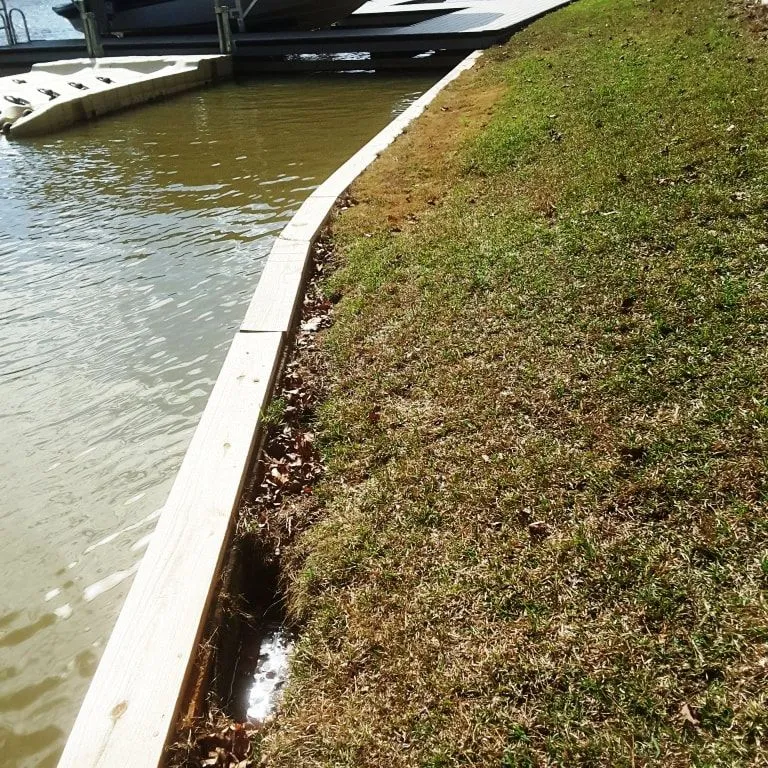
Common signs include cracks in the wall face, gaps or voids opening up between panels, soil or sand sinking or washing out behind the wall, a visible lean or bulge, water seeping through the wall during high tide, and settlement or sinkholes in the yard or dock area near the wall.
The leading cause is hydrostatic pressure and wave/tidal action pulling fine soil particles out through cracks, joints, or weep holes in the wall — a process called “soil migration.” Storm surge, boat wake, poor drainage, and aging or undersized weep systems accelerate the problem.
Often, yes. If the wall itself is still structurally sound and the problem is soil loss, voids, or minor cracking, targeted repair methods — such as polyurethane/poly-resin injection, grouting, or tie-back reinforcement — can restore stability without the cost and disruption of tearing out and rebuilding the wall.
Replacement is usually the right call when the wall has severe structural failure — collapsed sections, major overturning, extensive rebar corrosion, or a compromised footing — rather than just localized soil or void issues. A professional inspection is the best way to determine which category a wall falls into.
It’s a technique where a high-density, closed-cell polyurethane resin is injected into voids and loose soil behind or beneath the wall. The material expands, fills gaps, and cures rapidly into a solid, water-resistant mass that stabilizes soil and seals off further water intrusion.
Polyurethane is lighter, cures much faster (often within minutes), expands to fill irregular void shapes more precisely, and is less disruptive to install since it requires small injection ports rather than excavation. Cementitious grout is heavier, cures more slowly, and traditionally has been used for larger structural voids, though it can add significant load to a wall.
Many poly-resin injection repairs are completed in a matter of hours to a day or two, depending on the length of the wall and extent of the voids, and the area can typically be used again almost immediately after curing. Full replacements, by contrast, can take weeks to months once permitting is factored in.
In most coastal jurisdictions, yes — especially for work below the mean high-water line or that alters the shoreline. Requirements vary by state, county, and whether the property borders fresh or saltwater. A reputable contractor will identify what permits (if any) apply to your specific repair scope.
Costs vary widely based on wall length, damage severity, access (land vs. water access only), and repair method. Injection-based soil stabilization and void filling is generally far less expensive than full replacement, which can run tens of thousands of dollars depending on wall length, materials, and permitting complexity.
High-density geotechnical polyurethanes are engineered to be water-resistant and dimensionally stable, and manufacturers report service lives measured in decades when properly installed. Longevity depends on the underlying wall condition, so pairing injection repair with addressing any drainage issues (like failed weep holes) matters for long-term results.
Tie-backs are steel anchor rods that connect the seawall to a deadman anchor set back in stable soil, helping resist the lateral pressure pushing the wall outward. They’re typically added in higher-risk sections where a wall shows signs of leaning or where soil stabilization alone won’t address ongoing lateral movement.
Soil Stabilization
Soil stabilization is any physical, chemical, or mechanical method used to improve the engineering properties of soil — such as strength, density, and permeability — so it can adequately support a structure or resist erosion. Methods range from chemical additives and compaction to modern polyurethane injection.
Loose, eroded, or void-filled soil can no longer support the weight of what sits above or beside it, leading to settling, sinking slabs, cracked walls, and structural instability. Stabilizing that soil restores its bearing capacity and prevents further movement.
Voids typically form from water erosion (leaking pipes, poor drainage, storm intrusion), soil consolidation over time, tree root decay, or soil washing out through cracks in adjacent structures like seawalls or retaining walls.
A low-viscosity polyurethane is injected through small ports into the loose or void-affected soil. It permeates the soil, expands, and cures into a closed-cell foam that encapsulates loose particles, fills gaps, and creates a solid, water-tight, load-bearing mass — often within minutes.
Reputable geotechnical polyurethane systems are formulated to be inert once cured and are marketed as a lower-impact alternative to large-scale excavation, since they avoid heavy machinery, extensive digging, and the waste created by demolition-based repairs.
Single-component (like Terra-Lok-type) systems are low-viscosity formulas designed to permeate loose soils and form a water-tight barrier. Dual-component systems (like TerraThane-type) combine two parts on-site and are used for a broader range of applications, from lifting and undersealing slabs to filling larger voids and stopping water infiltration.
Yes — this is one of the most common residential applications. Polyurethane is injected beneath the sunken slab, where it expands to fill the void and lift the concrete back to grade, restoring both function and appearance without full slab replacement.
Retaining Walls & Related Concrete Repair
The underlying problem — soil loss and voids putting pressure on a wall — is similar, but retaining walls hold back landscaped or graded soil rather than a body of water. Repair techniques overlap heavily (poly-resin injection to stabilize and reinforce soil behind the wall), but retaining walls generally don’t need the same tidal/hydrostatic considerations as marine seawalls.
In many cases yes, if caught before structural failure. Injecting polyurethane resin into the soil behind the wall fills voids and stabilizes the backfill, relieving the pressure that’s causing the bulge, without the excavation and waste of a full teardown.
Process, Cost & Practical Questions
A qualified contractor will typically assess visible damage, probe for voids or soft spots, evaluate drainage and weep hole function, and identify the root cause of soil loss (not just the symptom) before recommending a repair plan tailored to the property.
Many contractors, including soildocs.com, offer financing options so property owners can prequalify and pay over time rather than all at once — worth asking about upfront since seawall and foundation work can be a significant expense.
Reputable contractors back their poly-resin injection and stabilization work with a warranty, though terms vary by company and application. Always ask what’s covered, for how long, and whether it transfers if you sell the property.
Look for experience specific to your region’s soil and coastal conditions, proper licensing and insurance, use of proven geotechnical materials (not generic construction-grade foam), a clear explanation of the root cause (not just a quick patch), and a warranty backing the work. A company like Gulf Coast Soil and Seawall Docs, which specializes specifically in Gulf Coast soil and marine conditions, is the kind of regional expertise worth prioritizing over a general contractor.
Polyurethane injection involves injecting a high-density resin into the ground beneath the affected structure. This resin expands and hardens, lifting and stabilizing the concrete slabs above. The process is typically used for lifting sunken concrete, stabilizing soil, and filling voids.
Polyurethane resin is highly durable and resistant to water and other environmental factors. It can last for decades without degrading, making it a long-term solution for issues like sinking driveways, failing retaining walls, and uneven pool decks. The material’s resilience helps maintain the integrity and stability of the repaired structure over time.
Polyurethane injection for seawalls and more offers several advantages:
Speed: The injection process is quick, often completed within hours, and the area can be used almost immediately after the repair. Minimal disruption: Unlike traditional methods that may require excavation, polyurethane injection causes minimal disruption to the surrounding area. Cost-effective: It is generally more affordable than replacing the entire structure or extensive excavation and reconstruction.
Precision: Polyurethane injection expands to fill gaps precisely, allowing accurate lifting and leveling.